
Top 5 Powerful Reasons Fiber Internet vs HFC Matters: Why Fiber is the Smart Choice for Your Home
January 14, 2026
Fiber Internet vs HFC is one of the most important comparisons when choosing the best internet service in Alpena and Northern Michigan. While both technologies use fiber optics to some extent, the experience they deliver is very different. Understanding these differences will help you make the best choice for your home or business.
 When it comes to choosing the best internet service in Alpena and Northern Michigan, the technology behind the connection makes all the difference. Two common options you’ll hear about are Hybrid Fiber-Coaxial (HFC) and Fiber-to-the-Home (FTTH). While they might sound similar, the experience they deliver is very different. HFC combines both fiber optics and coaxial cables, which may provide decent speeds, but it’s important to understand its limitations compared to pure fiber connections. Let’s break it down in simple terms to highlight the key differences and help you make an informed decision based on your internet needs and usage patterns.
What is HFC?
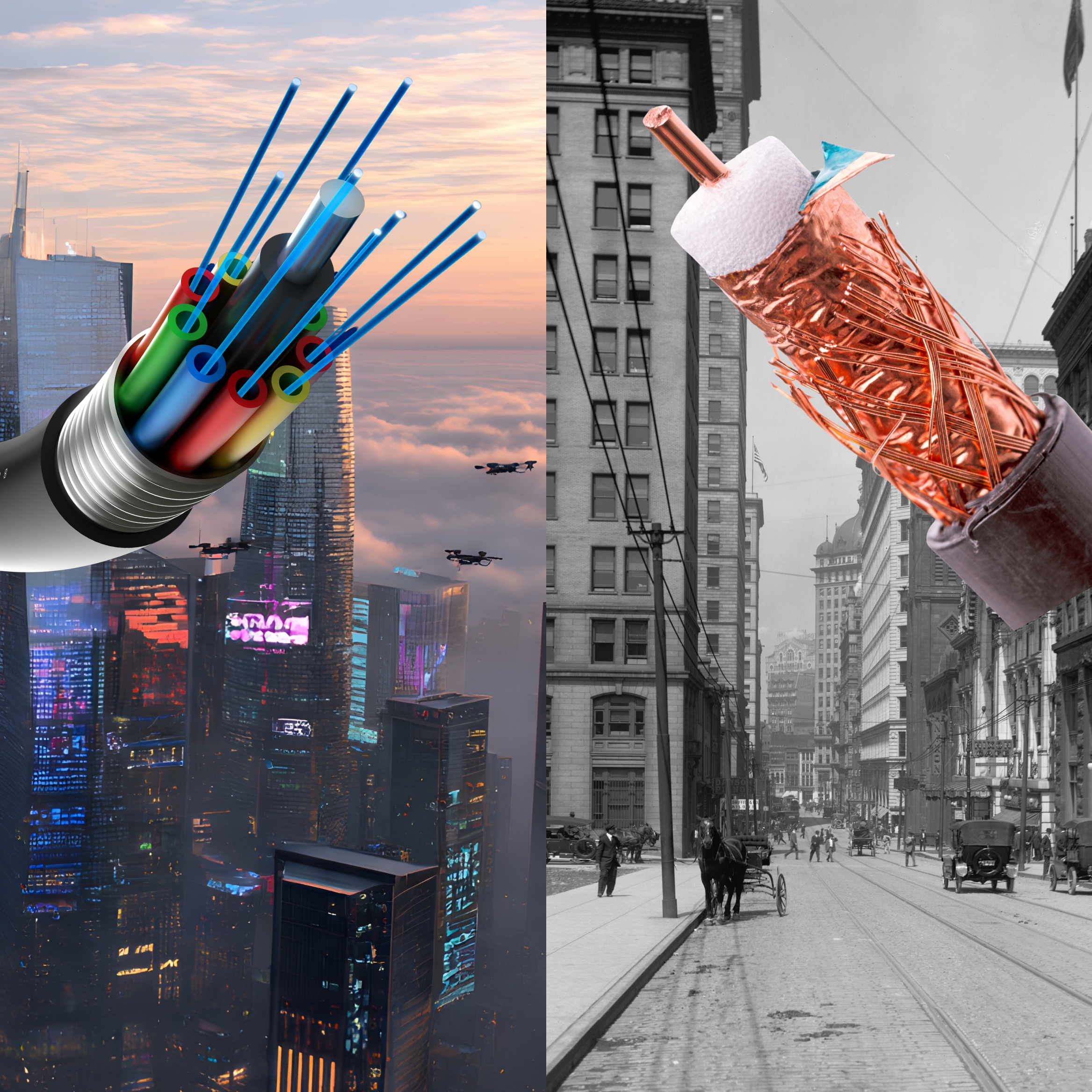
HFC stands for Hybrid Fiber-Coaxial. This technology utilizes a combination of fiber optic cables and traditional coaxial cables, which is how many cable TV providers deliver service. Here’s how it works in greater detail: First, fiber runs to a neighborhood node, where it is converted to coaxial cable for the final stretch to your home. This method allows for faster internet than older copper lines, but it still relies heavily on coaxial, which can introduce speed limitations due to shared bandwidth.
- Fiber runs to a neighborhood node, then switches to coaxial cable for the final stretch to your home.
- Coaxial cable is the same type used for cable TV, and while it’s reliable, it has limitations in speed and consistency.
Pros of HFC
- Widely available in many areas.
- Faster than older DSL connections.
Cons of HFC
- Speeds can slow down during peak hours because bandwidth is shared.
- Upload speeds are much lower than download speeds.
- More prone to interference and signal degradation.

What is Fiber?
Fiber-to-the-Home (FTTH) means fiber optic internet runs all the way to your house—no coaxial, no copper, just pure fiber. This is the gold standard for high-speed internet in Northern Michigan.
Why Fiber is Better
- Symmetrical speeds: Upload and download speeds are equal.
- Future-proof: Fiber can handle gigabit speeds and beyond without the same degradation in performance that coaxial experiences. This means that as your internet needs grow, fiber can easily adapt, providing support for multiple devices streaming 4K videos, online gaming, and more, all at the same time.
- Reliable: No interference, no slowdowns during peak times.
- Perfect for streaming, gaming, and working from home.
| Feature | Fiber Internet vs HFC |
| Speed | Fiber: Up to 1 Gbps+ | HFC: Up to 500 Mbps |
| Upload Speed | Fiber: Equal to download | HFC: Much lower than download |
| Reliability | Fiber: Highly reliable | HFC: Can slow during peak hours |
| Future-Proof | Fiber: Yes | HFC: Limited by coaxial cable |
Top 5 Reasons Fiber Internet vs HFC Matters
- Faster Speeds
Fiber delivers speeds up to 1 Gbps or more, while HFC typically maxes out at lower speeds and slows during peak hours. - Symmetrical Upload & Download
Fiber offers equal upload and download speeds—perfect for video calls, cloud backups, and streaming. HFC upload speeds are much lower. - Reliability & Consistency
Fiber is less prone to interference and congestion, ensuring stable performance even during peak usage. HFC often suffers from shared bandwidth issues. - Future-Proof Technology
Fiber can easily scale to multi-gigabit speeds as technology advances, while HFC is limited by coaxial infrastructure. - Ideal for Modern Homes
With smart devices, streaming in 4K, and remote work becoming standard, fiber supports multiple devices without lag—HFC struggles to keep up.

The Bottom Line
If you want consistent, lightning-fast internet that’s ready for the future, fiber is the clear winner. HFC is a step up from older technologies, but it can’t match the performance and reliability of a full fiber connection.
At Lakeshore Fiber, we’re proud to bring true fiber internet to Alpena and Northern Michigan—because your home deserves the best.
Furthermore, with the rise of smart homes and the Internet of Things (IoT), having a reliable internet connection is crucial. A fiber connection ensures that all your devices can communicate without lag, from smart speakers to home security systems. As the demand for bandwidth continues to increase, investing in fiber internet now could save you from needing to upgrade again in the near future.
Ready to upgrade to fiber? Check availability in your area today and experience the ultimate home Wi-Fi upgrade!
In conclusion, making an informed choice between HFC and fiber can dramatically impact your online experience. Fiber Internet vs HFC highlights not just a difference in technology, but in the overall user experience. With fiber, you’re not just getting internet; you’re ensuring a high-quality connection that meets today’s demands and is ready for the future.
External Resources:
https://www.fcc.gov/consumers/guides/broadband-speed-guide
Internal Links:
https://lakeshorefiber.com/plans