
Skip to content

Streaming TV vs Cable: 7 Smart Reasons Alpena Homes Are Cutting the Cord
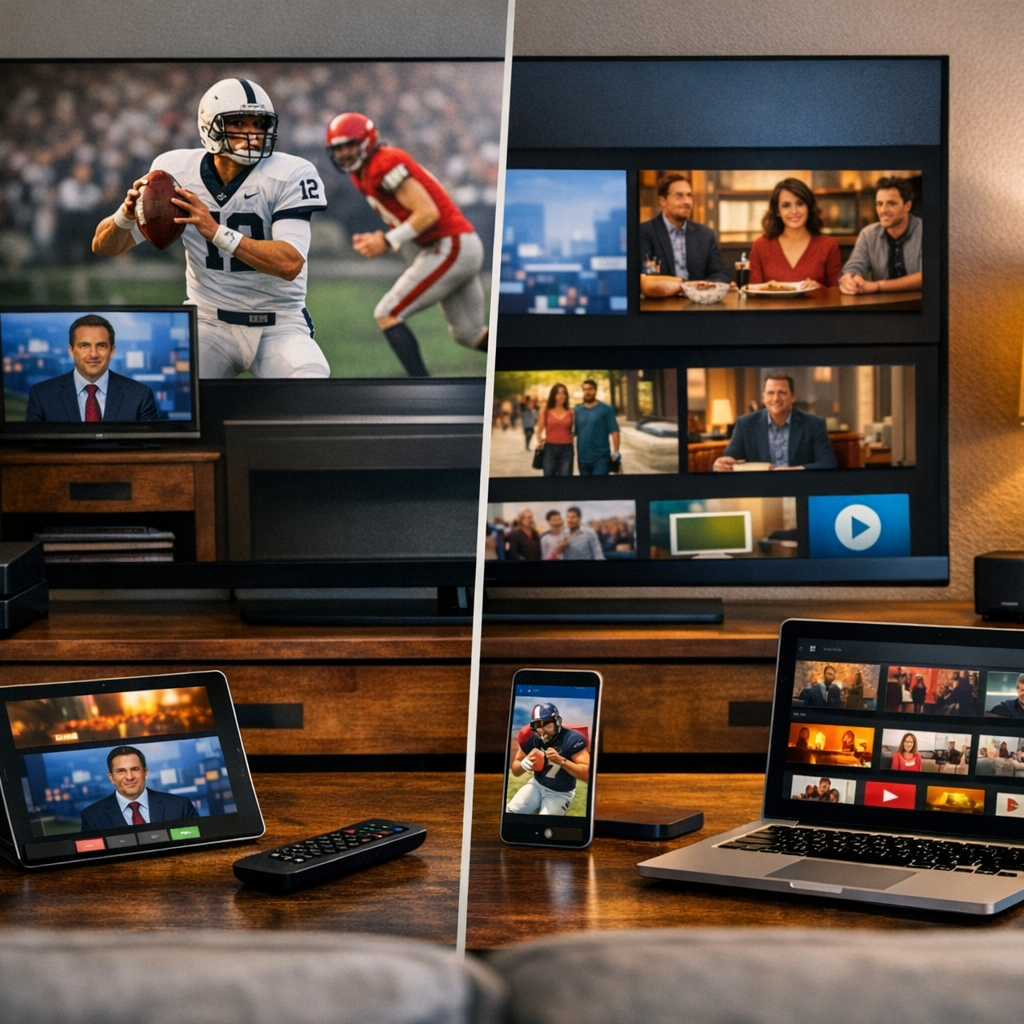
Streaming TV vs cable viewing on a smart TV with multiple devices connected at home

March 27, 2026

Streaming TV vs cable is a decision more homeowners across Alpena and Northeast Michigan are facing as monthly TV bills continue to rise.

For years, traditional cable TV was the only way to watch live news, sports, and entertainment at home. But today, more households across Alpena and Northeast Michigan are asking the same question:

Do we still need cable — or is streaming TV a better option?
At Lakeshore Fiber, we talk with customers every day who are switching from cable TV to live streaming services like YouTube TV, Hulu + Live TV, and Sling. Below, we’ll break down the real differences — and explain why streaming, paired with a fast fiber internet connection, is becoming the preferred choice for many local homes.

Streaming TV vs Cable: What’s the Difference?

How Traditional Cable TV Works

Traditional cable TV delivers channels through a physical cable line into your home, usually bundled with internet and phone service. Each TV requires a cable box, and channel packages are pre-set by the provider.

Pros of Traditional Cable TV

Familiar and simple
If you’re used to channel numbers and a traditional remote, cable TV feels straightforward.
Local channels included
Local news and regional sports networks are typically built into cable packages.

Cons of Traditional Cable TV

High monthly costs
Cable TV packages often start around $80–$100 per month and climb quickly once fees are added — equipment rentals, HD fees, sports surcharges, and taxes.
Limited flexibility
You pay for large channel bundles, even if you only watch a few stations.
Contracts and rate increases
Promotional pricing often expires, leading to surprise bill increases.
Extra equipment
Every TV usually needs its own cable box — more wires, more remotes, more hassle.

How Streaming TV Services Work

Streaming TV services deliver live channels over your internet connection using apps on smart TVs or streaming devices (like Roku, Apple TV, or Fire TV).
Popular options include:

These services combine live TV, on‑demand shows, and cloud DVR — without the bulky hardware.
Streaming TV vs Cable comparison showing how viewers can watch TV anywhere

Live and on‑demand TV streamed over a home internet connection to TVs, phones, tablets, and computers.


Why Streaming TV Is Winning Over Cable

1. Lower Monthly Costs

Most live streaming TV services cost $40–$80 per month, with far fewer hidden fees.
For many households, switching from cable to streaming can save $30–$70 every month — or hundreds of dollars per year.
When comparing Streaming TV vs Cable, streaming services consistently offer lower monthly costs and fewer hidden fees.

2. No Contracts, No Commitment

Streaming services are month-to-month:
  • Cancel anytime
  • Switch providers easily
  • Pause service when you don’t need it
You’re in control — not locked into a long-term contract.

3. Watch TV Anywhere

Unlike cable, streaming TV isn’t tied to one box in one room.
✅ Watch on multiple TVs
✅ Stream on phones and tablets
✅ Take your TV service with you when you travel

This flexibility is especially helpful for families, snowbirds, and remote workers.

Streaming TV watched on phones, tablets, laptops, and smart TVs at home and on the go

Streaming TV makes it easy to watch live and on‑demand shows at home, while traveling, or wherever you have an internet connection.


4. Built-In DVR Without the Equipment

Most streaming services include cloud DVR, letting you:
  • Record shows automatically
  • Pause live TV
  • Watch recordings from any device
No DVR boxes. No hard drive limits. No extra rental fees.

5. Fewer Devices and Less Clutter

Streaming TV works through:
  • Smart TVs
  • Streaming sticks
  • Gaming consoles
That means fewer cables, fewer remotes, and a cleaner setup — especially in older homes where wiring can be tricky.

The Key to Streaming TV: Reliable Internet

Here’s the honest truth: Streaming TV is only as good as your internet connection.
That’s where fiber internet makes a real difference.

Why Fiber Is Ideal for Streaming

✅ Consistent speeds — even during peak hours
✅ Handles multiple streams at once
✅ No buffering during live sports or news
✅ Better performance for Wi‑Fi, gaming, and work‑from‑home
In many cases, streaming problems aren’t caused by the TV service — they’re caused by slow speeds, weak Wi‑Fi, or outdated equipment.
Lakeshore Fiber customers benefit from:
  • Fast, symmetrical speeds
  • Low latency
  • Reliable connections built for modern households

Check to see if Lakeshore Fiber is available in your area.


Ease of Use: Streaming TV vs Cable

Cable TV
✔ Familiar
✖ Limited features
✖ Less flexible
Streaming TV
✔ More features and customization
✔ Personalized recommendations
✔ Easy once set up
There may be a short learning curve with streaming, but most households quickly find it more convenient — especially with voice remotes and simple app menus.
Ease of use is another area where Streaming TV vs Cable comparisons often favor streaming once the initial setup is complete.

Which Option Makes Sense for Your Home?

Cable TV may still make sense if:
  • You prefer the traditional channel experience
  • You don’t use smart TVs or streaming devices
  • Internet access is limited or unreliable
Streaming TV is usually the better fit if:
  • You want to lower your monthly bill
  • You value flexibility and mobility
  • You watch TV on multiple devices
  • You already have (or plan to get) reliable internet

Why Streaming TV Works Best with Lakeshore Fiber

For many homes in Alpena and Northeast Michigan, streaming TV paired with a strong fiber internet connection offers the best value, flexibility, and experience.
Cable TV had its time — but today’s households want:
  • More control
  • Fewer fees
  • Better performance
  • Less clutter
If you’re thinking about cutting the cord or want to make sure your home internet can handle streaming smoothly, our local team is always happy to help — with honest advice and solutions that actually fit how you use the internet.
Lakeshore Fiber Logo
Privacy Overview

This website uses cookies so that we can provide you with the best user experience possible. Cookie information is stored in your browser and performs functions such as recognising you when you return to our website and helping our team to understand which sections of the website you find most interesting and useful.