Fiber vs Cable Internet vs 5G Home Internet: Which Is Actually Best in 2027?
October 26, 2026
Fiber vs Cable Internet vs 5G Home Internet: Which Connection Wins?
Fiber vs cable internet is one of the most common comparisons homeowners make when choosing a new internet provider. Add 5G home internet to the mix, and the decision becomes even more confusing. If you’ve ever dealt with buffering, laggy video calls, or frustrating slowdowns during peak evening hours, understanding the differences between fiber, cable, and 5G can help you choose the best connection for your household.
When comparing fiber vs cable internet, many homeowners are surprised to learn that speed isn’t the only factor that matters. Reliability, latency, and upload performance can significantly affect the overall experience.
Why Your Internet Type Matters More Than Ever
Modern households demand much more from their internet connection than they did just a few years ago. Today, a typical home may have:
- Multiple 4K streaming devices
- Video conferencing for remote work
- Online gaming consoles
- Smart TVs
- Security cameras
- Smart thermostats and home automation systems
- Tablets and smartphones constantly connected
The technology behind your connection directly affects speed, reliability, latency, and your overall online experience.
Fiber vs Cable Internet: Understanding Fiber Technology
When discussing the fastest internet type, fiber consistently earns the top spot.
How Fiber Internet Works
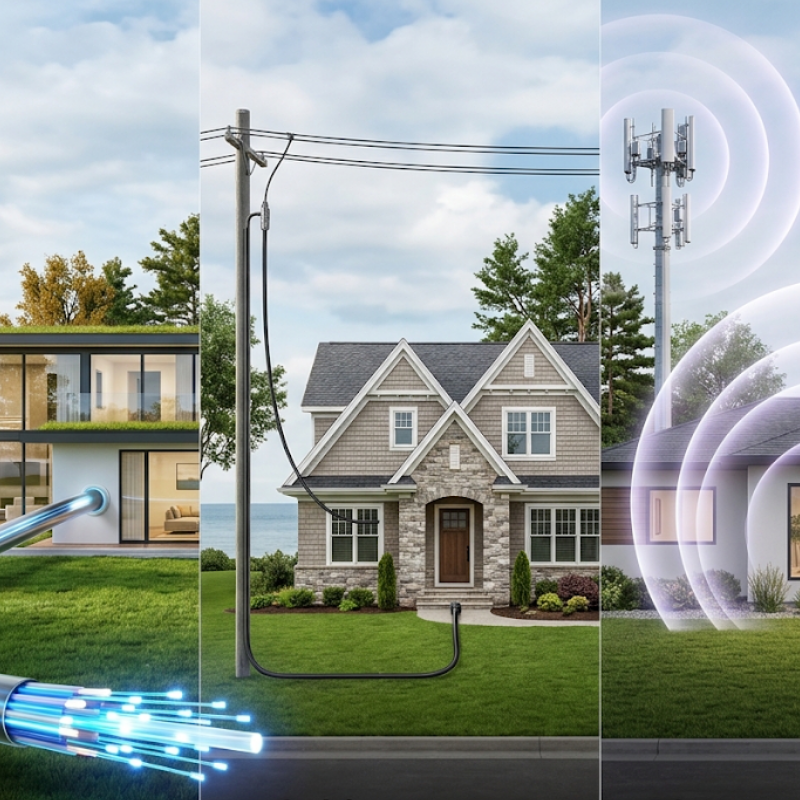
Fiber internet transmits data using pulses of light through ultra-thin glass strands called fiber-optic cables. Because data travels as light rather than electrical signals, fiber can move massive amounts of information with exceptional efficiency.
Think of it as upgrading from a two-lane road to a multi-lane superhighway dedicated entirely to internet traffic.
One of the biggest differences in the fiber vs cable internet debate is how each technology handles uploads. Fiber delivers symmetrical speeds, while cable networks typically prioritize downloads.
The Power of Symmetrical Speeds
One of fiber’s biggest advantages is symmetrical upload and download speeds.
For example:
- 500 Mbps Download / 500 Mbps Upload
- 1 Gig Download / 1 Gig Upload
- 2 Gig Download / 2 Gig Upload
Most internet users focus on download speed, but upload speed has become increasingly important for:
- Zoom and Teams meetings
- Cloud backups
- Uploading videos
- Smart security cameras
- Remote work applications
With fiber, uploads happen just as quickly as downloads.
Why Fiber Is So Reliable
Unlike many legacy technologies, fiber connections aren’t heavily affected by neighborhood congestion.
This means:
- More consistent speeds
- Less buffering during peak usage
- Better performance for multiple devices
- Lower latency and faster response times
For households that depend on reliable connectivity every day, fiber is widely considered the gold standard.
Benefits of Fiber Internet
✅ Symmetrical speeds
✅ Extremely low latency
✅ Consistent performance during busy hours
✅ Supports numerous connected devices
✅ Future-ready infrastructure
✅ Ideal for streaming, gaming, and remote work
[Insert Infographic Idea Here]
A visual showing data traveling via pulses of light through fiber-optic cables compared to traditional copper-based infrastructure.
Fiber vs Cable Internet: How Cable Networks Work
Cable internet remains one of the most widely available internet types across the United States.
Understanding the limitations of cable is important when evaluating fiber vs cable internet options in your area.
How Cable Internet Works
Cable internet uses coaxial cable infrastructure originally built for television services.
These cables are capable of delivering relatively fast download speeds and have served as a reliable upgrade over older DSL technologies.
Why Download Speeds Are Often Strong
Many cable providers advertise download speeds ranging from:
- 200 Mbps
- 500 Mbps
- 1 Gig or higher
For activities like streaming Netflix, browsing websites, and downloading files, cable internet can perform quite well.
The Upload Speed Limitation
Here’s where the biggest difference appears in the fiber vs cable internet discussion.
Cable networks are typically designed to prioritize downloads over uploads.
A typical cable plan might offer:
- 500 Mbps Download
- 20 Mbps Upload
Or:
- 1 Gig Download
- 35 Mbps Upload
As modern internet use becomes more interactive, those lower upload speeds can create bottlenecks.
Shared Neighborhood Bandwidth
Cable networks often rely on shared bandwidth among neighboring homes.
When many households are online simultaneously, especially during evening hours, performance may decrease.
This can lead to:
- Slower speeds
- Increased latency
- Streaming interruptions
- Gaming lag
- Reduced video call quality
Benefits of Cable Internet
✅ Broad availability
✅ Fast download speeds
✅ Suitable for many households
✅ Generally lower installation barriers
Drawbacks of Cable Internet
❌ Slower uploads
❌ More susceptible to congestion
❌ Less consistent peak-hour performance
❌ Higher latency than fiber
5G Home Internet Reality Check
The newest entrant in the home internet market is 5G home internet.
While it offers exciting possibilities, it’s important to understand both its advantages and limitations.
How 5G Home Internet Works
Unlike fiber and cable, 5G home internet relies on wireless cellular signals transmitted from nearby cell towers.
Instead of a wired connection running directly to your home, your gateway device communicates wirelessly with the provider’s network.
Why People Like 5G Home Internet
Many users appreciate 5G because:
- Simple installation
- No digging or cable installation
- Flexible deployment
- Competitive pricing in some markets
For renters and households looking for a quick setup, 5G can be appealing.
Real-World Performance Challenges
When comparing fiber vs 5G home internet, wireless technology introduces variables that wired networks largely avoid.
Several factors can influence performance:
Distance from the Tower
The farther your home is from the serving tower, the weaker the signal may become.
Physical Obstructions
Signal quality can be affected by:
- Trees
- Hills
- Buildings
- Home construction materials
Network Congestion
Because the same wireless infrastructure often serves mobile devices and home internet customers, speeds can fluctuate depending on network demand.
Weather Conditions
Heavy rain, snow, ice, and severe weather may impact signal quality more than wired internet technologies.
Benefits of 5G Home Internet
✅ Easy installation
✅ No wired connection required
✅ Potentially good speeds
✅ Growing availability
Drawbacks of 5G Home Internet
❌ Speeds can fluctuate significantly
❌ Weather can affect performance
❌ Higher latency than fiber
❌ Tower congestion impacts users
❌ Performance depends heavily on location
Fiber vs. Cable vs. 5G: Side-by-Side Comparison
This fiber vs cable internet comparison highlights why many households are making the switch to fiber when it becomes available.
| Feature | Fiber Internet | Cable Internet | 5G Home Internet |
|---|---|---|---|
| Speed | Fastest available speeds with symmetrical performance | High download speeds, slower uploads | Varies significantly by location and signal strength |
| Latency / Ping | Excellent, lowest latency | Good, but higher than fiber | Variable and often higher than wired options |
| Reliability During Peak Hours | Excellent and highly consistent | Can slow during neighborhood congestion | Can slow during network congestion |
| Weather Vulnerability | Minimal impact | Minimal impact | More vulnerable to weather and environmental conditions |
| Upload Speeds | Excellent and symmetrical | Limited compared to downloads | Variable |
| Streaming Performance | Outstanding | Very good | Good when signal conditions are ideal |
| Gaming Performance | Best option for competitive gaming | Good for most gamers | Can experience latency fluctuations |
| Remote Work Suitability | Excellent | Good | Moderate to good depending on location |
Which One Should You Choose?
There isn’t a one-size-fits-all answer. The best internet service depends on how you use the internet every day.
For Remote Workers
Recommended: Fiber Internet
Remote work increasingly relies on cloud services, video conferencing, file sharing, and collaboration platforms.
Fiber provides:
- Reliable video meetings
- Fast cloud backups
- Exceptional upload speeds
- Consistent all-day performance
If you’re asking, is fiber internet better than cable for working from home, the answer is typically yes, especially for households with multiple remote workers.
For Hardcore Gamers
Recommended: Fiber Internet
Competitive online gaming depends heavily on low latency rather than raw speed.
Fiber delivers:
- Lowest ping times
- Stable connections
- Faster game downloads
- Better performance under heavy household usage
Cable can still be a solid option, but fiber generally offers the most consistent gaming experience.
For Heavy Streamers and Smart Homes
Recommended: Fiber Internet
Homes running:
- Multiple 4K streams
- Smart TVs
- Security cameras
- Smart home devices
benefit significantly from fiber’s ability to handle many simultaneous connections without slowdowns.
For Families with Moderate Internet Needs
Recommended: Cable or Fiber
If your online activity mainly includes:
- Browsing
- Streaming
- Social media
- Occasional video calls
Cable may provide sufficient performance.
However, if fiber is available at a comparable price, it often delivers greater long-term value and reliability.
For Casual Users or Temporary Living Situations
Recommended: 5G Home Internet
5G may be a practical solution when:
- Fiber isn’t available
- Cable installation isn’t ideal
- You need service quickly
- You’re renting or living temporarily in a location
Just be aware that actual performance can vary substantially depending on coverage and network conditions.
The Bottom Line: Which Internet Technology Actually Wins?
When comparing fiber vs cable internet and fiber vs 5G home internet, one technology consistently rises to the top.
Fiber internet delivers the best combination of speed, reliability, low latency, and future-ready performance. Its symmetrical speeds make it ideal for today’s connected households, remote workers, gamers, streamers, and smart home users.
Cable internet remains a capable option in many areas, particularly where fiber is not yet available. Meanwhile, 5G home internet offers convenience and flexibility but generally cannot match the consistency of a dedicated wired connection.
If you’re searching for the fastest internet type, fiber remains the clear leader.
For residents and businesses in Alpena and surrounding communities, checking local fiber availability is one of the smartest steps you can take toward eliminating buffering, reducing video call frustrations, and getting the most from every connected device in your home.
Ready to Experience the Difference?
Before choosing your next internet provider, see whether fiber service is available at your address. The right connection can transform everything from work productivity to family movie night, delivering the speed and reliability today’s homes truly demand. Learn more about Mesh Wi-Fi Systems and Whole-Home Coverage.
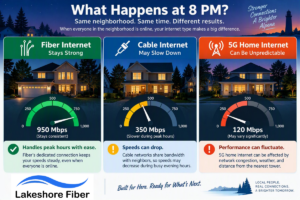
A visual comparison of how fiber, cable, and 5G home internet perform during peak evening usage when neighborhood internet demand is highest.